Having the right tools can make a world of difference in your DIY projects. Imagine how much easier and safer your tasks become when you use essential hand tools. They not only boost your efficiency but also help you avoid accidents. Remember to prioritize safety by wearing protective gear, keeping your workspace organized, and inspecting your tools before use.
Key Takeaways
Having the right hand tools boosts efficiency and safety in DIY projects. Essential tools like hammers, screwdrivers, and pliers are must-haves for any toolbox.
Regular maintenance of your tools, including cleaning and proper storage, extends their lifespan and improves performance. This saves you money in the long run.
Investing in quality tools pays off. They often last longer and perform better than cheaper options, making your projects easier and more enjoyable.
Tool #1: Hammer
Uses and Features
The hammer is one of the most essential tools in any toolbox. You use it to drive nails into wood, break apart materials, and even shape metal. Its versatility makes it a go-to tool for many DIY projects. Here are some common types of hammers you might find in a toolbox:
Hammer Type | Description |
|---|---|
Claw Hammer | Versatile, ideal for woodworking and general carpentry; used for driving and removing nails. |
Ball-Peen Hammer | Used in metalworking; features a flat face and rounded peen for shaping metal. |
Sledgehammer | Heavy-duty tool for demolition; effective for breaking concrete and masonry. |
Tack Hammer | Lightweight, designed for delicate projects; allows for precise nail placement. |
Rubber Mallet | Soft head prevents damage; used for assembling furniture and adjusting tiles. |
Cross-Peen Hammer | Ideal for shaping metal; features a wedge-shaped peen for detailed tasks. |
Framing Hammer | Heavier than a claw hammer; designed for framing and large carpentry projects. |
Importance of Basic Hand Tools
Having a hammer in your toolbox is a must. It’s not just about driving nails; it’s about having the right tool for the job. Did you know that more than one in fourteen homes in Canada require major repairs? Almost a quarter of homes need smaller repairs. This shows how often you might need a hammer for various tasks around the house. Whether you’re hanging pictures, building furniture, or tackling home repairs, a hammer is your best friend.
Tool #2: Screwdriver Set

Uses and Features
A screwdriver set is a must-have in your toolbox. You’ll find that screwdrivers come in various shapes and sizes, each designed for specific tasks. Here are some common types of screwdrivers you should consider:
Flathead Screwdriver: This one has a flat blade and works well with screws that have a straight, horizontal line. It’s perfect for simple tasks like tightening cabinet hinges.
Phillips Screwdriver: With a cross-shaped tip, this screwdriver fits into screws with a cross pattern. It provides better grip and reduces the chance of slipping.
Torx Screwdriver: This type features a star-shaped tip. You often see it in electronics and automotive applications, where it helps secure screws tightly.
Hex Screwdriver: Also known as an Allen wrench, this tool is great for furniture assembly and bike repairs. It fits into hexagonal screws, making it essential for many DIY projects.
Having a complete screwdriver set means you can tackle a variety of tasks without running to the store for the right tool.
Why It’s Essential
You might wonder why a screwdriver set is so crucial. Well, think about all the times you’ve needed to assemble furniture, fix appliances, or even just tighten a loose screw. Without the right screwdriver, these tasks can become frustrating and time-consuming.
A good screwdriver set allows you to work efficiently. You can easily switch between different types of screws, saving you time and effort. Plus, using the right screwdriver helps prevent damage to screws and materials.
In addition to screwdrivers, don’t forget to keep a pair of pliers handy. They can help you grip and twist when you need extra leverage. Together, screwdrivers and pliers make a powerful duo for any DIY enthusiast.
Investing in a quality screwdriver set ensures you’re prepared for any project that comes your way. So, whether you’re hanging shelves or fixing a leaky faucet, having the right tools at your fingertips makes all the difference.
Tool #3: Pliers
Uses and Features
Pliers are among the most versatile tools in your toolbox. You can use them for gripping, tightening, loosening, or cutting materials. Here are some common tasks where pliers shine:
Assembling furniture
Fixing leaks
Minor wiring tasks
Bending and shaping metal wires
Cutting and stripping wires in electrical work
With their various shapes and sizes, pliers enhance your ability to perform tasks with precision and efficiency. For example, insulated handles protect against electric shocks, making them essential for electrical work. This feature allows you to manipulate wires safely, reducing the risk of accidents.
Why It’s Essential
The importance of basic hand tools like pliers cannot be overstated. They provide a strong grip for small or slippery parts, which is crucial when you’re soldering or bending materials. In fact, using pliers can reduce labor time by up to 30% in some projects. They streamline tasks like cutting, twisting, and crimping wires, making your work faster and safer.
When you tackle home improvement projects, having a reliable pair of pliers can make all the difference. Whether you’re fixing a leaky faucet or working on a DIY electrical project, pliers help you get the job done efficiently. So, don’t underestimate their value-add a good set of pliers to your toolbox today!
Tool #4: Wrench
Uses and Features
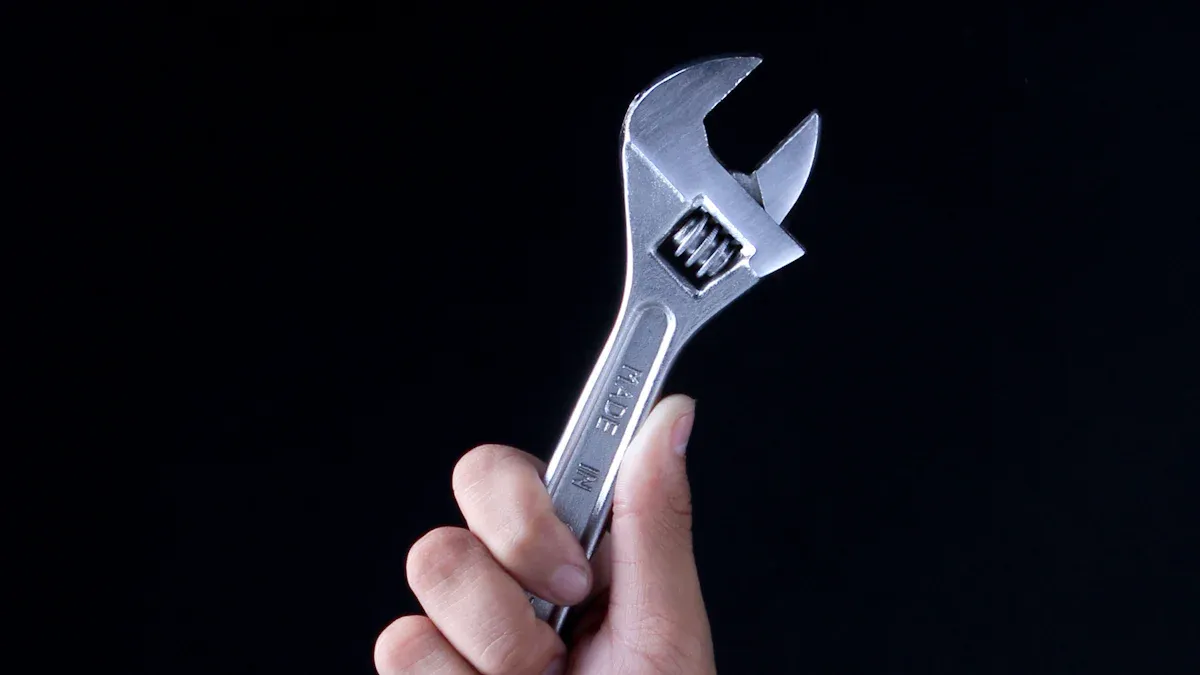
Wrenches are vital for loosening and tightening nuts and bolts. You’ll find them in various shapes and sizes, each designed for specific tasks. Here are some common types of wrenches you should consider adding to your toolbox:
Spanner Wrench: Great for adjusting components with small holes or pins.
Monkey Wrench: An adjustable tool perfect for various nut and bolt sizes, especially in plumbing.
Open-End Wrench: U-shaped for quick placement on fasteners, ideal for tight spaces.
Box-End Wrench: Provides a secure grip for high torque applications.
Chain Wrench: Useful for gripping cylindrical objects like pipes.
Impact Wrench: Delivers high torque for heavy-duty tasks, often used in automotive repair.
Importance of Basic Hand Tools
Having a wrench in your toolbox is essential. It allows you to tackle a wide range of tasks, from assembling furniture to fixing plumbing issues. An adjustable wrench adds flexibility, letting you work with different fastener sizes without needing multiple tools.
Here’s a quick comparison of adjustable and fixed wrenches:
Feature | Adjustable Wrench | Fixed Wrench |
|---|---|---|
Versatility | Highly versatile for various fastener sizes and shapes | Limited to specific sizes |
Adaptability | Can grip non-standard and damaged hardware | Rigid construction, precise fit |
Torque Capacity | Lower torque capacity compared to fixed wrenches | Superior torque capacity |
Use Case | Ideal for maintenance and repair tasks | Best for high-torque applications |
With the right wrench, you can work more efficiently and confidently. So, make sure to include a good set of wrenches in your toolbox!
Tool #5: Tape Measure
Uses and Features
A tape measure is a simple yet powerful tool that every DIY enthusiast should have. You use it to take accurate measurements for various projects, from hanging shelves to building furniture. Here are some key features of a tape measure:
Flexible Blade: The blade can bend around corners and edges, making it easy to measure irregular shapes.
Locking Mechanism: This feature keeps the tape in place while you measure, ensuring accuracy.
Clear Markings: Most tape measures have both metric and imperial units, allowing you to work with different measurement systems.
Using a tape measure helps you avoid costly mistakes. Accurate measurements are crucial for ensuring that everything fits perfectly in your project.
Why It’s Essential
You might wonder why a tape measure is so important. Well, accurate measurements can make or break your project. Here’s how they impact your work:
Prevent Delays: Accurate measurements help you avoid project delays. When you measure correctly, you finish tasks on time.
Enhance Satisfaction: Mistakes in measurements can lead to rushed jobs and frustrated clients. Getting it right the first time boosts overall satisfaction.
Consider using a laser measuring tape for even greater accuracy. These tools reduce human error and save time by allowing one person to measure distances without assistance. With a tape measure in hand, you can tackle any DIY project with confidence!
Tool #6: Utility Knife
Uses and Features
A utility knife is one of the most versatile tools you can have in your toolbox. You can use it for cutting various materials, making it perfect for many projects. Here are some materials that a utility knife can effectively cut:
Tungsten carbide blades: Great for tough materials like leather, thick cardboard, and dense plastics.
Ceramic blades: Ideal for precision tasks, especially in moisture-sensitive environments like food prep or crafting.
High-carbon steel blades: Perfect for precision cuts, though they can rust; coated options enhance durability.
Stainless steel blades: Good for general-purpose cutting, offering rust resistance and reliable edge retention.
However, keep in mind that utility knives may struggle with very thick hardboard or intricate cuts. For those tasks, specialized tools might be a better choice.
Why It’s Essential
You might wonder why a utility knife is a must-have. Well, think about all the times you’ve needed to cut something quickly and efficiently. Whether you’re opening boxes, trimming carpet, or crafting, a utility knife makes the job easier. Its retractable blade adds safety, allowing you to store it without worrying about accidental cuts.
Having a utility knife on hand means you can tackle a variety of tasks without needing multiple tools. It’s lightweight and easy to carry, making it perfect for both home and on-the-go projects. So, if you want to enhance your toolbox, don’t overlook the utility knife. It’s a small tool that packs a big punch!
Tool #7: Level
Uses and Features
A level is a simple yet powerful tool that helps you ensure surfaces are even. You can use it for various projects, from hanging pictures to installing shelves. Here are some common types of levels you might find handy:
Spirit Levels: These are versatile tools that use a liquid-filled vial to show if a surface is level.
Torpedo Levels: Compact and perfect for tight spaces, making them great for small projects.
Laser Levels: They project straight lines, which is super helpful for layout work.
Digital Levels: These provide precise measurements on a display, making it easy to see if something is level.
Water Levels: Using water in a tube, these are great for long-distance leveling.
Why It’s Essential
Using a level is crucial for achieving quality results in your projects. If you rush through the layout phase without checking for level, you might end up with crooked or misaligned shelves. This can lead to frustration and extra work later on. Instead, take your time and invest in careful measurement.
Using a quality level throughout your project can prevent mistakes. For example, when installing multiple shelves, consider creating templates and using laser levels for accuracy. This approach ensures everything aligns perfectly, giving your work a professional finish.
In short, a level is an essential tool that helps you achieve precision in your DIY projects. So, make sure to keep one handy in your toolbox!
Tool #8: Clamps
Uses and Features
Clamps are essential tools that provide stability while you work. They securely hold materials together, which is crucial for achieving precise results. You’ll find clamps useful in various projects, whether you’re woodworking or metalworking. Here are some common uses for clamps:
Hold pieces together while glue dries in woodworking projects.
Secure metal parts during welding or assembly in metalworking.
Ensure stability and accuracy in various DIY tasks.
With clamps, you can focus on your work without worrying about materials shifting or moving. They come in different types, including C-clamps, bar clamps, and pipe clamps, each designed for specific tasks.
Why It’s Essential
Using clamps enhances safety and precision in your projects. Here’s how they contribute to a safer workspace:
Select the Right Clamp for the Job: Choosing the appropriate clamp reduces the risk of accidents or damage caused by incorrect support.
Secure Clamping Surfaces: Ensure your workpiece and clamp rest on secure, non-slip surfaces during assembly.
Balanced Clamping Pressure: Apply evenly distributed pressure to minimize the risk of misaligned joints or workpiece damage.
By using clamps, you can work more confidently. They help you create strong bonds between materials, making your projects more durable. So, don’t overlook this vital tool in your toolbox. Clamps can make a significant difference in the quality of your work!
Tool #9: Chisels
Uses and Features
Chisels are fantastic tools for carving and cutting wood, stone, and other materials. They come in various shapes and sizes, each designed for specific tasks. Here are some common types of chisels you might find useful:
Chisel Type | Description |
|---|---|
Bench Chisel | A versatile tool for chopping, paring, and shaping wooden joints, ideal for general woodshop tasks. |
Bevel-Edge Chisel | Designed for precision woodworking, it allows clean cuts in corners and dovetail joints. |
Mortise Chisel | Used for carving rectangular holes (mortises) in wood, suitable for heavy hammering. |
Brick (Bolster) Chisel | A wide blade chisel for splitting bricks and shaping masonry blocks with precision. |
Masonry Chisel | Heavy-duty chisel for cutting stone and concrete, often used in construction and stone carving. |
Chisels are essential for detailed work. They allow you to make precise cuts and create intricate designs. When you prepare your chisels correctly, you can achieve sharp edges quickly. Techniques like using waterstones and a triple bevel are crucial for making those accurate cuts.
Why It’s Essential
Using chisels enhances your ability to work on detailed projects. Here’s why they’re a must-have in your toolbox:
Precision: Chisels help you achieve clean cuts, which is vital for joinery and fine woodworking.
Versatility: With different types of chisels, you can tackle various materials, from wood to masonry.
Control: You have more control over your cuts, allowing for intricate designs and details.
Whether you’re a beginner or a seasoned pro, having a good set of chisels can elevate your craftsmanship. So, don’t overlook this essential tool. It can make a significant difference in the quality of your work!
Tool #10: Multi-Tool
Uses and Features
A multi-tool is like having a toolbox in your pocket! It combines several tools into one compact device, making it perfect for various tasks. You can find features like pliers, screwdrivers, knives, and even bottle openers all in one handy tool. This versatility means you can tackle many projects without carrying multiple tools.
Some popular brands you might consider include:
Leatherman
Victorinox Swiss Army
Kershaw
Benchmade
Cold Steel
These brands are known for their innovative designs, perfect for everyday tasks, camping, or fishing. For example, the Leatherman Skeletool CX is a lightweight option that includes essential tools for daily use.
Why It’s Essential
Why should you add a multi-tool to your toolbox? Well, a survey shows that 76% of millennials prefer multi-functional tools over standard hand tools. Multi-tools save you time by reducing the need to switch between different tools, which enhances your efficiency. Plus, their lightweight design helps lighten your load, especially if you’re on the go.
Imagine needing to fix something quickly. Instead of rummaging through your toolbox, you can pull out your multi-tool and get to work. It’s practical, convenient, and a must-have for anyone who enjoys DIY projects. So, don’t miss out on this essential tool!
Choosing Essential Hand Tools
Consider Your Needs
When you’re choosing essential hand tools, think about what you really need. Here are some factors to consider:
Work Atmosphere: Is your workspace indoors or outdoors? This can affect the type of tools you need.
Budget: How much are you willing to spend? You can find cheaper options like plastic tools, but stainless steel offers better durability.
Weight: If you need to move your tools often, consider lighter materials like plastic or aluminum.
Durability: Will your tools last? Stainless steel is a great choice for long-term use.
Ergonomics: Choose tools that feel comfortable in your hand. This helps reduce strain and prevents injuries.
By assessing these factors, you can make informed decisions about which tools to add to your collection.
Quality vs. Price
Balancing quality and price is crucial when selecting tools. High-quality tools often come with benefits that cheaper options lack. For instance:
They’re made from robust materials that can withstand heavy use.
Longer warranty periods usually indicate a manufacturer’s confidence in the product’s durability.
Customer reviews can give you insights into how well tools perform over time.
Investing in quality tools pays off in the long run. They often feature advanced technology that improves efficiency and ergonomic designs that reduce fatigue. So, while it might be tempting to go for the cheapest option, remember that quality tools can save you time and frustration down the road.
Choosing the right tools is essential for your DIY projects. By considering your needs and balancing quality with price, you can build a toolbox that serves you well for years to come.
Maintenance of Basic Hand Tools
Cleaning and Care
Taking care of your basic hand tools is essential for keeping them in top shape. Regular cleaning and maintenance can extend their lifespan and improve performance. Here are some effective tips to help you maintain your tools:
Wipe down tools with a multipurpose degreaser after each use.
Soak tools in hot water with a commercial cleaner for 20-30 minutes.
Use a wire brush to scrub off dirt and grease.
Dry tools thoroughly to prevent rust.
Apply a protective coating or oil to keep rust at bay.
By following these steps, you can avoid costly replacements and repairs. Proper maintenance not only enhances your tools’ effectiveness but also saves you money in the long run.
Storage Solutions
How you store your basic hand tools can significantly impact their longevity. Proper storage minimizes the risk of misplacement or damage. Here are some smart storage solutions:
Keep tools in a toolbox or designated container to protect them from dust and moisture.
Hang tools on pegboards for easy access and to reduce wear and tear.
Organize your tools to prevent rust and damage, making it easier to find what you need.
An organized setup not only enhances safety by reducing hazards but also contributes to overall efficiency. When your tools are stored correctly, you can focus on your projects without worrying about misplaced items.
By investing time in cleaning and storing your basic hand tools properly, you ensure they remain reliable companions for all your DIY adventures!
Having the right hand tools in your toolbox makes all the difference. Quality tools empower you to tackle projects with confidence. Remember to maintain them properly. Here are some tips for keeping your tools in top shape:
Check for Wear and Tear: Look for dull blades or worn grips.
Proper Cleaning: Remove dirt and rust regularly.
Lubrication and Protection: Keep moving parts lubricated to prevent corrosion.
Invest in your tools, and they’ll serve you well for years to come! 🛠️
FAQ
What are essential hand tools for a beginner’s toolbox?
You should start with a hammer, screwdriver set, pliers, and a tape measure. These tools cover most basic tasks.
How do I maintain my hand tools?
Keep your tools clean and dry. Regularly check for wear and apply oil to moving parts to prevent rust.
Can I use power tools instead of hand tools?
Power tools are great for speed, but hand tools offer precision and control. Both have their place in your toolbox.