

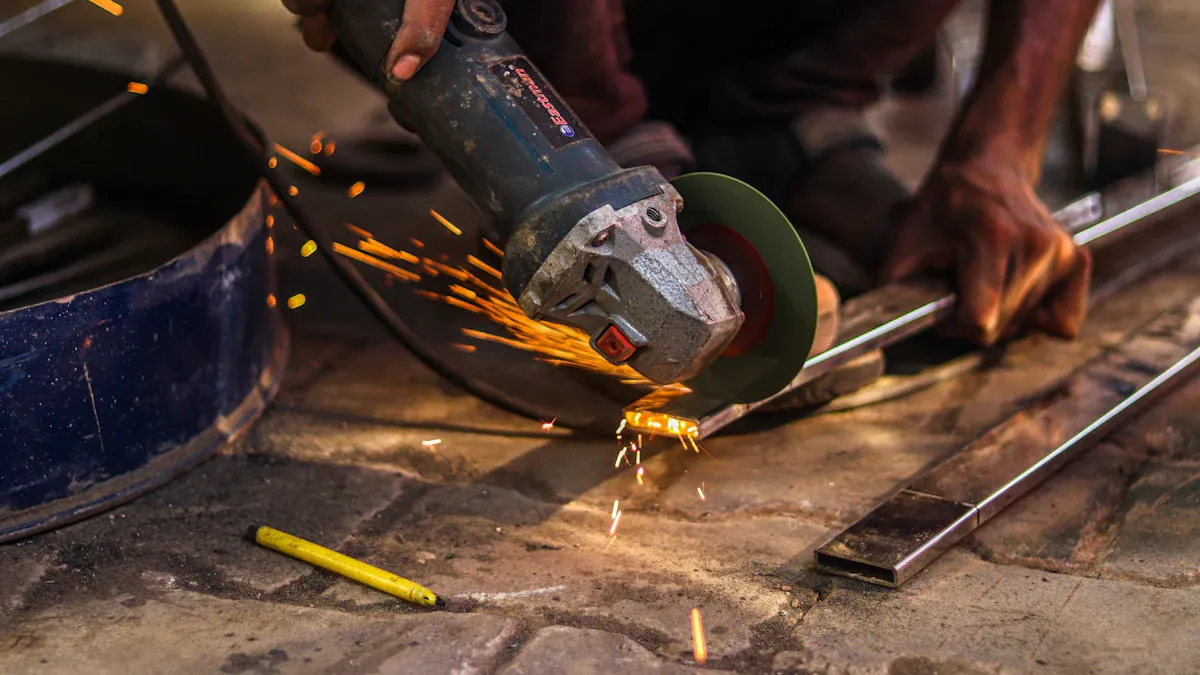
Power grinder safety is crucial for anyone using these powerful tools. Each year, angle grinders cause around 5,400 injuries, highlighting the risks involved. You must remain aware of these dangers and follow safety practices. Prioritizing safety can prevent accidents and keep you safe while working.
Key Takeaways
Always wear personal protective equipment (PPE) like safety goggles, gloves, and hearing protection to prevent injuries while using power grinders.
Inspect your power grinder before each use. Look for damage, ensure proper assembly, and check that safety guards are in place to maintain safe operation.
Keep your workspace clean and well-lit. Remove flammable materials and ensure tools are within reach to reduce the risk of accidents.
Safety Precautions

Tool Maintenance
Proper tool maintenance is essential for safe operation. Regular upkeep helps prevent accidents and ensures your power grinder functions effectively. Here are some key maintenance practices you should follow:
Clean the Tool Regularly: Dust and debris can accumulate, affecting performance. Wipe down your grinder after each use to keep it in good condition.
Check the Switch: Ensure the switch slides freely. A sticking switch can lead to unexpected starts, posing a safety risk.
Use Guards and Shrouds: Always attach safety guards to your grinder. These devices help control dust and protect you from flying debris.
Choose the Right Extension Cord: Use an extension cord that matches your grinder’s power requirements. This prevents voltage loss and overheating.
Avoid Overloading: Use the appropriate cord length to avoid overloading the circuit. This helps maintain consistent power supply.
Ensure Proper Power Source: If using multiple grinders, make sure your power source can handle the load without tripping.
You should conduct maintenance checks at different intervals. Perform a brief visual evaluation before each use. Daily checks should include cleaning and inspecting for loose parts. Monthly inspections by a safety or maintenance department are also recommended. Certified technicians should perform professional inspections semi-annually or annually to ensure everything is aligned and calibrated correctly.
Personal Protective Equipment (PPE)
Wearing the right personal protective equipment (PPE) is crucial when operating power grinders. PPE protects you from potential injuries and complies with OSHA safety requirements. Here’s a list of essential protective gear you should wear:
Safety goggles or a face shield
Hearing protection
Gloves
Dust mask or respirator (if needed)
Protective clothing
Each piece of PPE plays a vital role in keeping you safe. For example, safety goggles prevent eye injuries from flying debris, while hearing protection guards against noise-induced hearing loss. Gloves reduce the risk of cuts and scrapes, and protective clothing shields your skin from sparks and hot materials.
PPE Item | Effectiveness in Injury Reduction |
|---|---|
Eye Protection | Prevents eye injuries from flying debris, sparks, and dust during power tool use. |
Hearing Protection | Protects against hearing damage from loud noises produced by power tools. |
Safety Gloves | Reduces the risk of cuts, scrapes, and punctures while handling tools. |
Safety Shoes | Protects feet from falling objects and sharp tools, reducing the risk of foot injuries. |
Face Shields | Offers additional protection against flying debris and chemical splashes beyond safety glasses. |
By following these safety precautions and wearing the appropriate PPE, you can significantly reduce the risk of accidents while using power grinders.
Preparing the Work Area
Clear Workspace
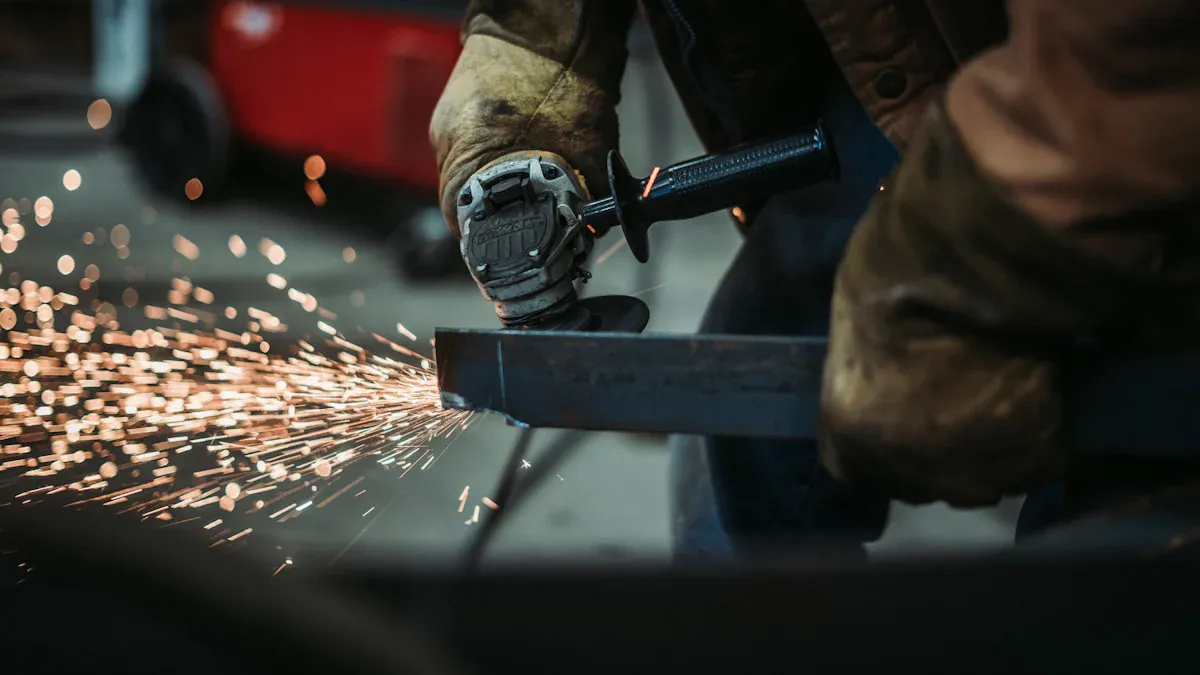
A clean and organized workspace is vital for safe operation when using power grinders. You should start by removing any flammable materials from the area. This step helps prevent fires and keeps you safe. Next, ensure that your workspace is well-lit and stable. Good lighting allows you to see clearly, reducing the risk of accidents.
Follow these steps to prepare your workspace effectively:
Clear the area of any flammable materials.
Ensure the workspace is well-lit and stable.
Secure your workpiece using a vise or clamps to prevent movement.
Gather all necessary protective gear, including safety glasses, gloves, and ear protection.
Check the grinder’s condition, ensuring it has the correct wheel and is firmly attached.
Inspect the grinder for any damage or wear.
Arrange all tools and accessories within reach for efficiency.
Keeping the area around the grinder free of accumulated dust is essential. Dust can ignite and cause dangerous situations. Regularly cleaning your workspace with a portable dust collector minimizes dust buildup. You can also use permanent floor markings to indicate areas that need better housekeeping practices.
Adequate Lighting
Adequate lighting is crucial for reducing workspace hazards. Poor lighting can lead to mistakes and accidents. Make sure your work area is brightly lit. If natural light is insufficient, use additional lamps or overhead lights. Proper lighting helps you see the details of your work and the condition of your tools.
By maintaining a clean workspace and ensuring adequate lighting, you create a safe work area that promotes efficiency and reduces the risk of accidents.
Selecting the Right Grinder and Wheel
Choosing the right grinder and wheel is essential for ensuring safety and achieving the desired results. Different tasks require specific tools, and using the wrong equipment can lead to accidents. Here are some factors to consider when selecting your grinder and wheel:
The material being ground
Grinding pressure
Required finish and form accuracy
Area of contact
Wheel speed
Coolant use
Machine/spindle horsepower
Angle Grinder Safety
Angle grinders are versatile tools, but they come with risks. Common accidents include:
Getting in touch with the wheel, which can cause severe injuries.
Wheel failure, leading to shattering if not handled properly.
Getting hit by projectiles, as flying debris can occur during use.
Kickback, which can result in serious injuries or fatalities.
Entanglement, where improper clothing can lead to accidents.
Fire hazards from sparks igniting flammable materials.
Electric shock risks associated with electric angle grinders.
To enhance angle grinder safety, always wear appropriate PPE and ensure your workspace is clear of hazards.
Bench Grinder Safety
Bench grinders also require careful attention. Here are some recommended safety features to minimize risks:
Safety Feature | Description |
|---|---|
Proper Mounting | Ensure the grinder is securely anchored to prevent movement during operation. |
Personal Protective Equipment (PPE) | Always wear safety glasses or goggles, and consider face protection against flying debris. |
Safety Shields and Guards | Must be in place and properly adjusted to protect the user from sparks and wheel breakage. |
Work Rest Adjustment | Keep the work rest adjusted to within 1/8-inch of the wheel to prevent jamming and injuries. |
Tongue Guard Adjustment | Should be adjusted to within 1/4-inch of the wheel to deflect sparks and contain wheel fragments. |
Inspection Before Use | Inspect the grinder and attachments for defects before each use to ensure safety. |
Avoid Loose Clothing | Do not wear loose clothing or jewelry to prevent entanglement in the grinder. |
Stand to the Side | Position yourself to the side of the grinder during startup to avoid injury from potential wheel breakage. |
By following these guidelines, you can ensure both angle grinder safety and bench grinder safety while effectively completing your tasks.
Inspecting Equipment
Check for Damage
Before using your power grinder, you must inspect the equipment thoroughly. This step ensures safety and optimal performance. Here are key steps to follow:
Conduct a visual examination of the grinding wheel for cracks, chips, or uneven wear.
Perform the ring test by tapping the wheel with a non-metallic object to check for hidden damage.
Verify that wheel flanges are clean and properly aligned before mounting.
Ensure safety guards cover at least 75% of the wheel’s surface and check for any damage.
Inspect the power cord for cuts or abrasions and test electrical components for proper operation.
Look for common signs of damage during your inspection. These include:
Unusual vibration patterns during grinding operations.
Temperature increases in spindle or bearing housings.
Grinding quality degradation despite proper setup.
Unusual noise levels from rotating components.
Control system error messages or erratic behavior.
By identifying these issues early, you can prevent accidents and maintain a safe working environment.
Proper Assembly
Proper assembly of your power grinder is crucial for safe operation. Always follow the manufacturer’s instructions when assembling or adjusting your grinder. Ensure that all components fit securely and that no parts are loose. A well-assembled grinder minimizes the risk of accidents and enhances performance.
Regular inspections are vital. They help you catch potential problems before they escalate. Make it a habit to inspect the portable grinder and the work area before starting any project. This practice not only keeps you safe but also improves the quality of your work.
Common Hazards and Mitigation
Flying Debris
When using power grinders, flying debris poses a significant risk. This hazard can lead to serious injuries, especially to your eyes and face. Common causes of flying debris include:
Contact with the grinding wheel
Wheel breakage
Improperly secured workpieces
Poorly maintained equipment
To reduce the risk of injuries from flying debris, follow these strategies:
Always wear appropriate personal protective equipment (PPE), especially safety goggles and head protection.
Select the proper grinding wheel with quality abrasives to minimize the chances of breakage.
Ensure that your tool and material settings are correct before starting your work.
By taking these precautions, you can significantly decrease the likelihood of accidents caused by flying debris.
Electrical Hazards
Electrical hazards are another major concern when operating power grinders. Risks include electric shock, short circuits, and equipment failure. Common causes of electrical hazards involve:
Damaged power cords
Improper grounding
Wet working conditions
Overloaded circuits
To mitigate these risks, consider the following strategies:
Inspect power cords regularly for cuts or abrasions. Replace any damaged cords immediately.
Ensure that your grinder is properly grounded to prevent electric shock.
Avoid using power tools in wet conditions. If you must work in such environments, use tools designed for wet conditions.
Do not overload circuits. Make sure your power source can handle the load of your grinder.
Implementing these strategies can help you maintain a safe working environment and reduce the risk of electrical hazards.
Mitigation Strategy | Description |
|---|---|
Environmental Adjustments | Improve workplace ventilation to reduce dust levels significantly. |
Personal Protective Equipment (PPE) | Utilize breathing masks, safety goggles, and heavy-duty gloves to protect operators. |
Operator Training | Teach operators essential skills and safety protocols to minimize risks during operations. |
Safer Tool Designs | Ensure tools have effective safety guards and mechanisms to prevent accidents. |
By understanding these common hazards and implementing effective mitigation strategies, you can enhance your safety while using power grinders.
In summary, prioritize safety when using power grinders. Always wear personal protective equipment (PPE) like goggles and gloves. Inspect your grinder before each use and keep your workspace clear of hazards. Regular training and open communication about safety can foster a culture of vigilance. Remember, your safety is in your hands! ⚠️
FAQ
What should I wear when using a power grinder?
You should wear safety goggles, gloves, hearing protection, and a dust mask to protect yourself from debris and noise.
How often should I inspect my power grinder?
Inspect your power grinder before each use. Conduct thorough checks monthly and have a professional inspection every six months.
Can I use a power grinder in wet conditions?
Avoid using power grinders in wet conditions. Wet environments increase the risk of electric shock and equipment failure.

