Working with delicate connectors like MIL-DTL-24308 or Molex requires tools that offer precision and protect pins from damage. The right soldering insertion extraction tool combines durable materials with ergonomic design for comfortable handling.
Quality tools feature stainless steel tips and slip-resistant grips to improve accuracy and control. These factors make a significant difference in completing detailed soldering tasks smoothly and efficiently.
D SUB Connector Pins Removal and Insertion Tool
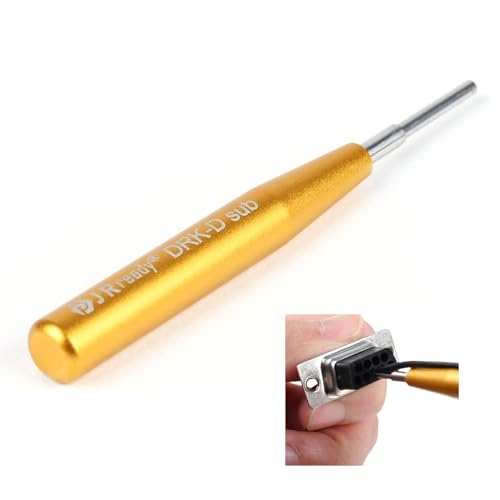
Should you work with D-sub connectors often, you’ll appreciate how this tool makes pin removal and insertion a breeze. It fits MIL-DTL-24308, TE/AMP/Harting 5A Han DB, and DB9 connectors, saving you time and frustration. The needle bar features a clever middle groove that keeps wires firmly in place, so you won’t worry about accidental damage. Made from tough stainless steel, this tool resists bending and breaks, and its bright finish fights corrosion and wear. Whether you’re extracting or inserting heavy-duty crimp contacts, this tool feels reliable in your hands. Plus, should you ever need help, customer support is ready to assist with images and advice.
Best For: technicians and engineers who frequently work with D-sub connectors and need a reliable tool for easy pin removal and insertion.
Pros:
- Compatible with multiple connector standards including MIL-DTL-24308, TE/AMP/Harting 5A Han DB, and DB9.
- Needle bar with middle groove securely holds wires, preventing damage during use.
- Durable stainless steel construction with corrosion and wear resistance.
Cons:
- Specialized tool may not be useful for connectors outside of D-sub types.
- May require some skill or practice to use effectively without damaging pins.
- Limited to heavy-duty crimp contacts, possibly incompatible with other pin types.
Solder Wick Braid 10ft Desoldering Tool Roll
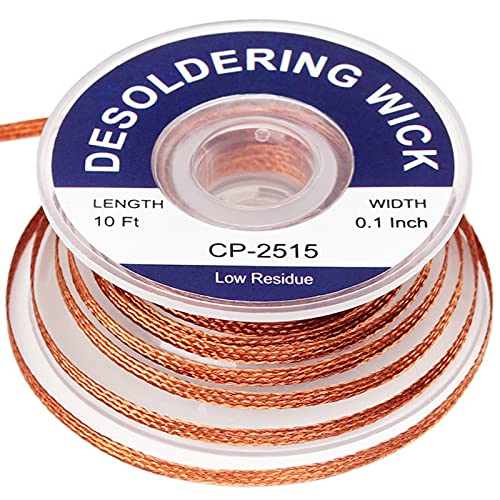
In case you work with small electronics or enjoy fixing gadgets at home, the Solder Wick Braid 10ft Desoldering Tool Roll is a breakthrough for you. This tool helps you correct mistakes on tiny circuit boards, remove components, or even clean solder from delicate parts. Its copper wires are woven precisely to soak up molten solder quickly, making your work neat and efficient. You’ll find it handy for everything from mechanical keyboard switches to computer motherboards. Just heat the wick’s tip with your soldering iron, and watch it absorb solder fast, leaving a clean surface ready for your next step.
Best For: hobbyists, technicians, and professionals working with small electronics or PCB repairs who need an efficient tool for desoldering and correcting soldering mistakes.
Pros:
- Precisely woven copper braid enhances solder absorption and efficiency.
- Long 10ft length provides ample material for multiple projects.
- Versatile use for various electronics including mechanical keyboards and motherboards.
Cons:
- Only one width (0.1 inch) may limit use on larger solder joints.
- Requires a soldering iron and some skill to use effectively.
- No-clean wick may still leave minor residue requiring cleaning in sensitive applications.
Pin Insert and Extraction Tool | M81969/39-01

At the time you’re working with delicate connectors like those in the MIL_DTL-34308 or AS81659 series, having the right tool makes all the difference. The Pin Insert and Extraction Tool M81969/39-01 from Aiconics is designed just for that. It fits size 20 pin and socket contacts perfectly, helping you insert or remove them without damage. Its small, lightweight plastic body feels comfortable in your hand, and the green and white color code makes it easy to spot among your tools. Since it’s QPL approved, you can trust its quality. Plus, it’s been available since mid-2021, so it’s a reliable choice for your connector work.
Best For: Technicians and engineers working with MIL_DTL-34308 and AS81659 connectors who need a reliable tool for inserting and extracting size 20 pin and socket contacts.
Pros:
- QPL approved, ensuring high quality and reliability.
- Lightweight and compact design for comfortable handling and easy portability.
- Color-coded green/white for quick identification among other tools.
Cons:
- Made of plastic, which may be less durable under heavy or industrial use.
- Limited to size 20 pin/socket contacts, not suitable for other sizes.
- Small size (1 x 1 x 1 inches) might be challenging to use for users with larger hands.
ENGINEER SS-03 Professional Solder Sucker Pump

Should you be a professional or hobbyist who values precision and ease, the ENGINEER SS-03 Professional Solder Sucker Pump is made just for you. Crafted in Japan with high-quality aluminum, it fits comfortably in one hand, letting you work smoothly without fatigue. Its spring-loaded mechanism creates strong suction to quickly remove melted solder, leaving less residue behind. The heat-resistant design withstands temperatures up to 350℃, so you can place it right next to the soldering iron tip without worry. Plus, the silicone nozzle and self-cleaning shaft keep your workflow steady, preventing clogs and enhancing productivity. It even comes with two silicone tubes for versatile use.
Best For: Professionals and hobbyists who require precise, efficient, and convenient solder removal during electronic assembly or repair.
Pros:
- High-quality aluminum construction ensures durability and a comfortable one-handed grip.
- Spring-loaded mechanism provides strong suction for quick and effective solder removal with minimal residue.
- Heat-resistant design and silicone nozzle allow close placement to the soldering iron tip without damage or clogging.
Cons:
- Limited to soldering temperatures up to 350℃, which may not suit some high-temperature soldering applications.
- May require occasional replacement of silicone tubes for optimal performance.
- Compact size might feel too small for users with larger hands or those preferring a bulkier grip.
JRready Molex Mini-Fit Jr. Pin Extraction Tool
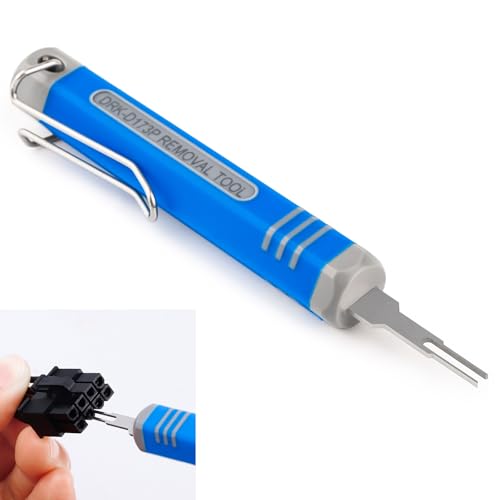
You’ll appreciate the JRready Molex Mini-Fit Jr. Pin Extraction Tool during tasks involving Molex Mini-Fit Jr. connectors like ATX, EPS, and PCI-E. It’s designed to remove pins gently without harming the wiring harness, which means you can maintain your electronics confidently. The tool fits a range of crimp terminals and cable gauges, making it versatile for various tasks. Its high-grade alloy steel tip is crafted with care, ensuring durability and precise pin release. Plus, JRready provides clear instructions and helpful customer support, so you won’t feel stuck throughout your project. In case you need to extract pins without wires, their Ejector Rod is a smart additional tool.
Best For: Technicians and electronics enthusiasts who need a reliable tool to safely extract pins from Molex Mini-Fit Jr. connectors without damaging wiring harnesses.
Pros:
- Compatible with a wide range of Mini-Fit Jr., Mini-Fit HCS, and Mini-Fit Plus HCS terminals and cable gauges.
- High-grade alloy steel tip made with Wire EDM technology ensures precision and durability.
- Clear usage instructions and dedicated customer support enhance ease of use and troubleshooting.
Cons:
- Specifically optimized for pins attached to wires, requiring a separate tool for pins without wires.
- May have a learning curve for first-time users unfamiliar with pin extraction tools.
- Limited to connectors with a 2.00mm pitch, restricting use with other connector types.
Solder Sucker Manual Desoldering Pump Tool

Should you often tackle electronics repairs or DIY projects, the solder sucker manual desoldering pump tool is made just for you. Built from aircraft-grade aluminum, it’s tough and resistant to corrosion. Its ergonomic design fits comfortably in your hand, letting you work with one hand while the other holds your soldering iron. The heat-resistant silicone nozzle bends easily to reach tight spots, handling temperatures up to 350 °C. Inside, a strong spring creates quick vacuum suction, clearing molten solder fast without any batteries or cords. Cleaning is simple too-you just wipe, unscrew, and lubricate parts to keep it working smoothly.
Best For: electronics enthusiasts and DIYers who need a durable, precise, and cordless desoldering tool for frequent solder removal tasks.
Pros:
- Made from corrosion-resistant aircraft-grade aluminum for long-lasting durability.
- Ergonomic, one-handed operation with a heat-resistant silicone nozzle that handles up to 350 °C.
- Manual spring mechanism provides strong vacuum suction without batteries or cords, reducing maintenance.
Cons:
- Manual operation may require more physical effort compared to electric desoldering irons.
- Not suitable for continuous or heavy industrial use where automated desoldering might be preferred.
- Requires regular cleaning and lubrication to maintain optimal performance.
JRready Molex Pin Extractor Tool 2PCS
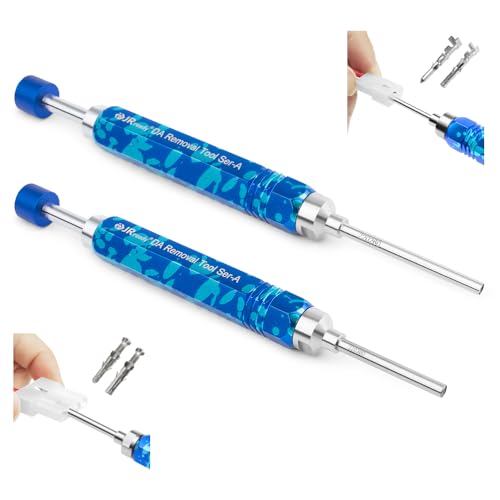
In case you frequently find yourself working with Molex connectors, the JRready Molex Pin Extractor Tool 2PCS is a revolutionary product for making your job easier. This set includes two tube-type ejector rods designed to fit different Molex pin sizes. You get one tool for .062″ pins and another for .093″ pins, covering a wide range of connector types like AMP, JST, and Molex series. Made from hardened alloy steel, these tools feature chamfered needle heads that slide smoothly into connector holes. Their push rod mechanism helps you remove terminals without struggle. Plus, the comfortable camouflage blue handles give you a firm grip while adding a bit of style.
Best For: Professionals and DIY enthusiasts who frequently work with Molex, AMP, and JST connectors and need a reliable and efficient pin extraction tool.
Pros:
- Includes two tools covering .062″ and .093″ pin sizes for versatile connector compatibility.
- Made from hardened alloy steel with chamfered needle heads for smooth and precise terminal removal.
- Ergonomic camouflage blue hexagonal handles provide a comfortable grip and stylish appearance.
Cons:
- Limited to Molex, AMP, and JST connector series, may not fit other connector types.
- Only includes two pin sizes, which might not cover all possible connector pin dimensions.
- Tube-type ejector rods may require careful handling to avoid damage during extraction.
Factors to Consider When Choosing Soldering Insertion Extraction Tools
At the time of choosing soldering insertion extraction tools, you need to consider how well they fit your specific connectors and how strong their materials are for long-lasting use. You’ll want tools that feel comfortable in your hands and offer precise control to avoid any damage during work. Keeping these points in mind helps you select tools that make your job easier and more accurate every time.
Tool Compatibility Range
Because you rely on your soldering insertion extraction tools for precise work, making certain they fit your connectors perfectly is essential. You need tools that match the connector series or standards you use, like MIL-DTL or common types such as D-sub and Molex Mini-Fit Jr. Pay close attention to the contact size range your connectors require, whether it’s size 20 pins or wires between 14 and 30 AWG. Also, check whether the tool suits the physical dimensions and pitch of your pins or sockets to avoid damage during handling. In case you deal with both male and female crimp terminals, find tools designed for both. Finally, confirm the tool works well with pins attached to wires and those without, so you’re ready for any maintenance need.
Material Durability Standards
Although you could focus on finding the right size and fit for your soldering insertion extraction tools, the materials they’re made from play an equally vital role. You want tools crafted from hard, wear-resistant metals like stainless steel or hardened alloy steel so they don’t bend or break while you work. Look for passivated surfaces that resist corrosion and keep the tool looking clean and shiny over time. Precision-made, quenched, and polished tips protect delicate connector pins and extend tool life. Since soldering involves heat up to 350°C, the materials need to handle that without warping or degrading. At the point durable materials meet good design, your tools stay reliable longer, reduce hassle, and help you focus on getting the job done right every time.
Ease Of Operation
Sturdy materials give your soldering tools the strength they need, but how easy they are to use makes a big difference in your workday. Whenever a tool fits comfortably in your hand, you won’t tire out quickly-even during long projects. Look for tools designed for one-handed use, so you can work smoothly without awkward grips. Color-coded parts help you spot the right tool fast, cutting down mistakes and frustration. A smooth mechanism means you won’t have to force pins or wires, which keeps delicate parts safe. Lightweight, compact tools slide into tight spaces with ease, making tricky connectors less of a hassle. Plus, tools with clear instructions or smart design features let you get the job done right, even provided you’re still learning the ropes.
Precision And Accuracy
At the time you’re working with tiny pins and delicate wires, precision becomes your best friend. You need tools that fit perfectly with specific contact sizes, like size 20 pins or mini-fit terminals, to avoid bending or damaging them. Look for features like grooves or chamfered needle heads-they keep the tool steady and help you handle parts more accurately. High-quality materials and careful manufacturing, such as quenched tips or wire EDM machining, guarantee your tool stays reliable and precise over time. Whenever removing solder, a well-woven solder wick braid improves capillary action, making it easier to target molten solder without disturbing nearby components. These details matter because the right precision and accuracy can save you from frustrating mistakes and protect your delicate connections.
Ergonomic Design Features
At the time you spend hours working with tiny pins and delicate connectors, the comfort of your tools can make all the difference. Ergonomic design helps reduce hand fatigue through fitting naturally in your grip. Contoured or hexagonal handles give you better control so you can handle small parts without slipping. Whenever tools are lightweight and balanced, you’ll notice easier handling and smoother movements, which means less strain on your fingers and wrist. Non-slip surfaces keep your tools from sliding during those tricky moments, enhancing your precision and safety. Plus, compact designs let you work with one hand, opening up tight spaces without hassle. Choosing tools with these features turns tough tasks into manageable ones, making your work not just easier but more enjoyable.
Maintenance And Longevity
Comfortable tools that fit well in your hand are a great start, but keeping those tools in top shape matters just as much. You want tools made from corrosion-resistant materials like stainless steel or aircraft-grade aluminum because they last longer and resist wear. Regularly cleaning out solder residue and lubricating moving parts keeps your tools working smoothly. Some tools even have self-cleaning features that cut down on maintenance, saving you time and effort. It’s also smart to have spare parts like silicone tips or nozzles handy so you can quickly replace worn components. Choosing sturdy, precise tools helps prevent damage and deformation, so your tools stay reliable for years. Taking these steps means you won’t have to worry about your tools failing at the moment you need them most.
Functionality And Efficiency
At the time you’re choosing soldering insertion extraction tools, functionality and efficiency should top your list. You want tools that grip pins securely and align perfectly to avoid damaging wires. Features like middle grooves or chamfered needle heads stabilize connectors, making your job smoother and safer. Whenever the tool feels comfortable in your hand, it lets you work faster and with less strain. Look for spring-loaded actions or push rods-they speed up insertion and extraction while easing manual effort. Durable materials such as hardened stainless or alloy steel guarantee your tool won’t bend or wear out quickly, keeping your work consistent. Combining ergonomic design with smart mechanisms means you’ll handle tasks quickly and accurately, saving time and frustration on every project.
Accessories And Support
While choosing soldering insertion extraction tools, you’ll want to pay close attention to the accessories and support that come with them because these extras can make your work much easier and more reliable. Having spare tips, silicone nozzles, and quick-release nozzles means you can switch parts quickly and keep your tools in top shape. Clear instructions help you avoid mistakes that could damage delicate pins during insertion or removal. Plus, tools compatible with different connector types often need specialized accessories to fit perfectly. Don’t forget about after-sales support; good customer service and troubleshooting can save you time and frustration as issues arise. Warranty and return policies also give you peace of mind, making your purchase feel safer and smarter.
Frequently Asked Questions
What Safety Precautions Should I Take When Soldering?
You should wear safety goggles, work in a well-ventilated area, avoid inhaling fumes, use heat-resistant gloves, keep your workspace tidy, and never touch the soldering iron tip. Always unplug it after you’re done.
How Do I Clean Soldering Tips Effectively?
You clean soldering tips through wiping them on a damp sponge or brass wire cleaner while hot. Don’t use abrasive materials, and apply fresh solder to prevent oxidation. Regular cleaning keeps your tip effective and long-lasting.
Can These Tools Be Used for Surface Mount Devices?
Consider these tools as your precision scalpel-they’re perfect for surface mount devices. You’ll easily insert and extract tiny components without damage, giving you control and finesse in your soldering craft every time you work on delicate circuits.
What Is the Difference Between Leaded and Lead-Free Solder?
Leaded solder contains lead, making it easier to work with due to its lower melting point. Lead-free solder uses safer metals but melts hotter, so you’ll need more heat and care to avoid damaging components.
How Do I Prevent Overheating Components During Soldering?
You prevent overheating through using a temperature-controlled soldering iron, working quickly, and applying heat only as long as needed. Use heat sinks or tweezers to protect sensitive components and avoid excessive soldering temperatures.