

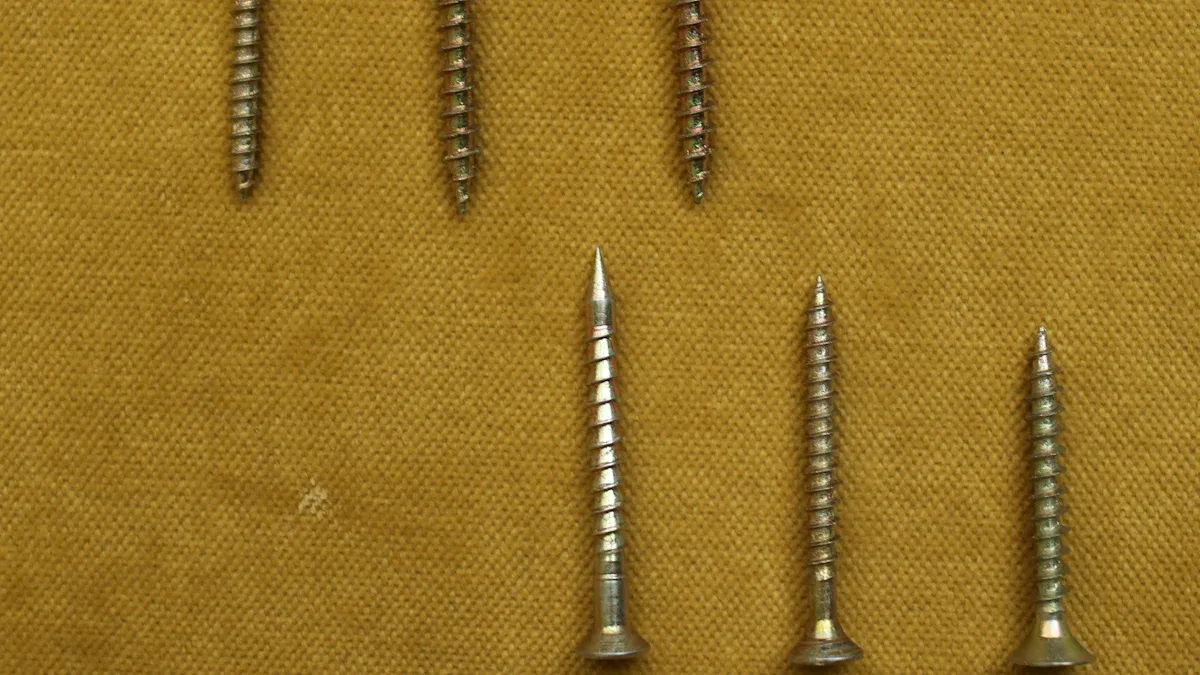
Nails and screws are essential fasteners in construction and DIY projects. You rely on them to hold materials together securely. Understanding the different types of nails and screws helps you choose the right fastener for your specific needs. For instance, common nails work well for framing and flooring, while finish nails are perfect for trim work. Each type serves a unique purpose, making it crucial for you to know their features and applications.
Key Takeaways
Know your fasteners: Different nails and screws serve unique purposes. Choose wisely based on your project needs.
Material matters: Use stainless steel for outdoor projects to prevent rust and ensure durability.
Understand strength: Nails excel in shear strength, while screws provide superior tensile strength for secure holds.
Consider ease of use: Nails allow for faster installation, while screws offer better stability and can be reused.
Match fasteners to materials: Ensure compatibility to avoid issues like corrosion and ensure structural integrity.
Nail Types
Common Nails
Common nails, also known as round head nails, are versatile fasteners widely used in woodworking. You can use them for general-purpose applications, such as framing and flooring. Their tapered body and sharp point make driving them into wood easy. Common nails are typically made from low-carbon steel, which provides excellent tensile strength. Here’s a quick overview of the materials used for common nails:
Material | Properties and Applications |
|---|---|
Low-Carbon Steel | Most common, excellent tensile strength, cost-efficient, suitable for indoor use, prone to rust unless coated. |
High-Carbon Steel | Superior strength and hardness, ideal for structural applications, used when high pull-out strength is needed. |
Stainless Steel | Rust and corrosion-resistant, ideal for outdoor and marine environments, longer service life but higher cost. |
Copper | Rarely used for heavy-duty, ideal for decorative work, naturally corrosion-resistant. |
Aluminum | Lightweight, corrosion-resistant, lower strength, used for non-load-bearing applications. |
Finishing Nails
Finishing nails are thinner than common nails and have smaller heads. This design makes them perfect for delicate projects where you want to avoid visible fasteners. You can use finishing nails for trim work, cabinetry, and other applications where aesthetics matter. Their smooth, small head allows for easy countersinking, which helps create a clean finish. Here are some common uses for finishing nails:
Project Type | Description |
|---|---|
Large Trim | Used for thicker trim like door casings and baseboards. |
Cabinetry | Ideal for assembling and securing heavy cabinetry. |
Heavily Used Areas | Suitable for areas with frequent movement, such as door or window jambs. |
Wire Nails
Wire nails are another type of fastener you might consider. They are slim and sharp-tipped, making them more resistant to bending compared to common nails. This characteristic makes wire nails ideal for intricate woodworking projects. They are less likely to split wood, which is a significant advantage when working with delicate materials. Here’s how wire nails compare to common nails:
Wire Nails: Slim, sharp-tipped, more resistant to bending, ideal for intricate woodworking, generally more expensive.
Common Nails: Wider construction, flat head with square shank, more laborious to drive, ideal for heavy-duty tasks, cheaper, and longer-lasting for larger jobs.
Specialty Nails
Specialty nails serve specific purposes in construction and crafts. They come in various designs to meet unique needs. Here are some examples of specialty nails and their uses:
Nail Type | Description and Use |
|---|---|
Sinker | A common nail with a narrower shank and a special head designed to be sunk flush with wood surfaces. |
Box Nails | Thinner shanks make them suitable for thinner wood materials, but they lack the strength for structural use. |
Duplex Head Nails | Used for temporary construction; can be easily removed due to the two heads. |
Annular Ring Nails | Provide extra grip for applications like subflooring to prevent squeaking. |
Masonry/Concrete Nails | Thick and strong, designed for fastening into hard materials like concrete and mortar. |
Finish/Casing Nails | Used for installing trim and frames, with a design that allows for easy countersinking. |
Brad Nails | Thin shanks reduce wood splitting, typically used in light woodworking with a nail gun. |
Roofing Nails | Short shank and wide head, used for fastening shingles and roofing materials. |
Understanding the different types of nails helps you choose the right fastener for your projects. Each type has its unique characteristics and applications, ensuring you can find the perfect fit for your needs.
Screw Types
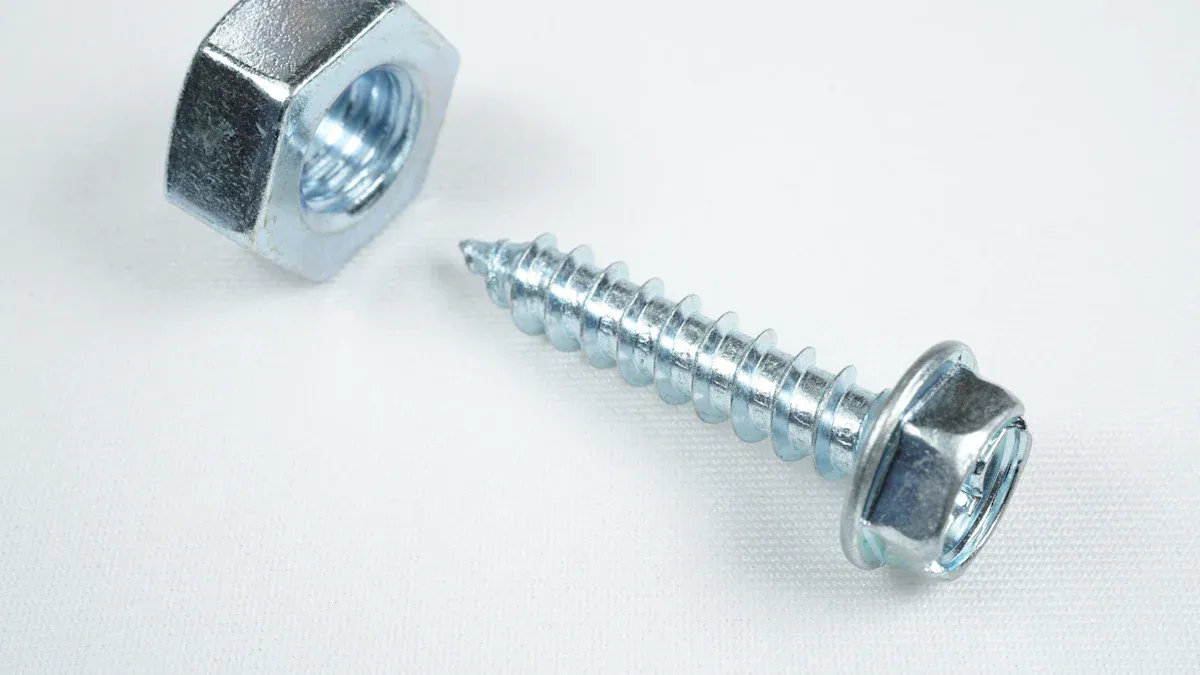
Wood Screws
Wood screws are essential for joining wooden materials. They come in various designs and sizes, making them suitable for different applications. You can choose from several head types, including:
Flat Head: Ideal for countersinking in carpentry.
Oval Head: Great for decorative applications like trim and molding.
Round Head: Perfect for attaching hardware to wood, such as hinges and locks.
Pan Head: Used in metal hardware and for joining thin pieces of wood.
Trim Head: Excellent for applications requiring a clean finish, like cabinet making.
Truss Head: Provides a large bearing surface, ideal for fragile materials.
Washer Head: Distributes load effectively, suitable for wall hangings.
When selecting wood screws, consider their thread patterns. Fine-threaded screws work best in hardwoods like oak and maple. Coarse-threaded screws excel in softwoods and composite materials. The design features, such as taper and thread characteristics, significantly impact their performance.
Here’s a table summarizing the primary types of wood screws and their typical applications:
Screw Type | Typical Application |
|---|---|
Indoor Rated Wood Screws | Installing drawer slides and hinges |
PowerPro Exterior Wood Screws | Assembling wood pieces together, suitable for indoor and outdoor use |
Pocket Hole Screws | Used for pocket holes and other applications requiring a tight fit |
Drywall Screws | Intended for hanging drywall, not recommended for furniture projects |
Machine Screws
Machine screws are designed for fastening metal parts together. They typically have a uniform diameter and are available in various lengths. You can use them in numerous applications, including machinery assembly and electrical connections. Here are some common types of machine screws:
Type of Machine Screw | Description | Common Uses |
|---|---|---|
Hex Head Machine Screws | Resembles traditional bolts, can be installed with a wrench or screwdriver. | Used in various applications requiring high torque fastening. |
Flat Head Machine Screws | Sits flush with the surface, providing a tidy finish. | Ideal for applications where a smooth surface is needed, such as in panel assembly. |
Oval Head Machine Screws | Compromise between flat and pan head styles, less obvious when installed. | Used where a less prominent fastener is desired, such as in decorative applications. |
Cheese Head Machine Screws | Flat-topped cylindrical head, known for durability. | Commonly used in applications requiring strong fastening, such as in machinery assembly. |
Machine screws are often made from materials like carbon steel, stainless steel, and brass. Each material impacts durability and suitability for specific environments. For example, stainless steel offers excellent corrosion resistance, making it ideal for outdoor applications.
Specialty Screws
Specialty screws serve unique purposes in various applications. They often feature designs tailored for specific tasks. Here are some examples of specialty screws:
Specialty Screw Type | Purpose | Unique Features |
|---|---|---|
Security Screws | Prevent tampering and unauthorized access | Unique drive designs such as torx, hex pin, tri-wing, or spanner heads. |
Self-Drilling Screws | Intended for drilling and tapping holes without pre-drilling | Usually used in metal applications, with a drill bit tip. |
Concrete Screws | Used for fastening items to concrete or masonry surfaces | Special threads and materials suitable for concrete applications. |
Drywall Screws | Designed for fastening drywall to wood or metal studs | Coarse threads and often a bugle head to prevent tearing the paper surface of drywall. |
When you consider screw installation, specialty screws can simplify your projects. For instance, self-drilling screws eliminate the need for a pilot hole, speeding up the installation process. However, remember that self-tapping screws require a pilot hole to function effectively.
Understanding the different types of screws helps you select the right fastener for your projects. Each type has unique characteristics and applications, ensuring you can find the perfect fit for your needs.
Nails vs Screws
Strength and Durability
When comparing nails vs screws, you should consider their strength and durability. Nails have smooth, slender shafts that rely on friction and pressure to hold materials together. They excel in shear strength, making them ideal for structural components. On the other hand, screws feature threaded shafts that twist into materials, providing a stronger grip. They offer superior tensile strength, which helps resist pulling forces and prevents loosening over time.
Here’s a quick comparison of their strengths:
Nails:
Higher shear strength due to flexibility.
Excellent for framing and structural work.
Screws:
Much stronger tensile strength.
Ideal for applications needing a strong vertical hold.
Ease of Use
In terms of ease of use, nails generally allow for faster installation, especially with nail guns. This speed makes them suitable for large construction projects. Screws, however, require more time due to the need for pilot holes. They provide a more secure hold in softer woods and are easier to remove for adjustments.
Fastener Type | Ease of Installation | Best Use Case |
|---|---|---|
Nails | Generally faster, especially with nail guns | Large construction projects |
Screws | Requires more time due to pilot holes | Projects needing strength and precision |
Cost Considerations
Cost is another important factor when choosing between nails and screws. Nails are typically cheaper and easier to apply, making them a cost-effective choice for many projects. However, they may lead to higher long-term costs due to potential replacements and repairs. In contrast, screws, while more expensive upfront, offer durability and reusability. This can prevent structural failures and reduce maintenance issues over time.
Product Name | Price (per unit) |
|---|---|
21 Degree Plastic Strip Framing Nails for Wood | $0.03 |
21 Degree 3 inch Strip Framing Nails | $16.80 |
304 Stainless Steel Hexagonal Big Flange Nail | $0.16 |
34 Degree Paper Strip Nails | $7.37 |
2 Inch Screw Nail Drywall Screw | $900 |
Understanding the differences between nails and screws can help you make informed decisions for your projects. Each fastener has its unique advantages and disadvantages, so consider your specific needs before choosing.
Choosing the Right Fastener
Project Requirements
When you start a project, consider its specific requirements. Different applications call for different fasteners. For example, if you work on exterior applications, nails often provide an affordable solution for robust outdoor projects like shingles or siding. In contrast, screws are better for decking applications because they offer a secure fix and ease of installation. Here’s a quick overview of preferred fasteners based on application:
Application | Preferred Fastener | Reason for Preference |
|---|---|---|
Exterior Applications | Nails | Affordable and suitable for robust outdoor projects like shingles or siding. |
Decking Applications | Screws | Provide a secure fix and ease of installation, with options to hide them effectively. |
Interior Finishes | Nails | Easy installation and discrete appearance for delicate finishes like baseboards. |
Floor Installations | Screws/Nails | Screws for subfloors (better strength), nails for flooring panels (flexibility). |
Cabinet Building | Screws | Stronger joints ideal for furniture-building. |
Framing | Nails | High shear resistance and cost-effectiveness, though screws are gaining popularity. |
Drywalling | Screws | Better tensile strength and grip, securing drywall more effectively. |
Material Compatibility
Material compatibility plays a crucial role in choosing the right fastener. You want to prevent issues like corrosion by matching fasteners with substrate materials. For instance, using stainless steel screws with treated lumber helps avoid galvanic corrosion. Here are some key factors to consider:
Material Compatibility: Prevents galvanic corrosion by matching fasteners with substrate materials.
Load Requirements: Assess expected load types to ensure structural integrity.
Environmental Conditions: Choose corrosion-resistant fasteners for outdoor projects.
Ease of Installation: Fasteners that simplify installation can reduce labor time and errors.
Aesthetics: Select fasteners that complement the design for visible applications.
Environmental Factors
Environmental factors significantly affect fastener performance. Moisture and temperature fluctuations can impact the mechanical properties of wood. For outdoor projects, consider using aluminum or stainless steel fasteners, as they resist rust and corrosion. Here are some recommendations based on environmental conditions:
Outdoor Fasteners:
Aluminum: Lightweight and rust-resistant, ideal for light to medium-load applications.
Stainless Steel: High-grade corrosion resistance, suitable for heavy-duty jobs.
Galvanized: Cost-effective, coated with zinc for rust resistance.
Indoor Fasteners: Typically made of uncoated steel, suitable for environments without harsh conditions.
By considering project requirements, material compatibility, and environmental factors, you can confidently choose the right fastener for your needs.
Choosing the right fastener is crucial for your projects. You must consider your specific needs and the characteristics of different nails and screws. Here are some key takeaways:
Material Matters: Use stainless steel for outdoor projects due to corrosion resistance.
Size and Grade: Select fasteners based on load requirements; Grade 5 for cars, Grade 8 for high-stress areas.
Corrosion Resistance: Fasteners should resist oxidization; stainless steel is preferred for its protective chromium layer.
Understanding the differences between nails and screws can improve your project outcomes. Screws provide better holding power and stability, which minimizes issues like fastener pops. This knowledge helps you make informed decisions that enhance the durability and quality of your work.
FAQ
What is the main difference between nails and screws?
Nails rely on friction to hold materials together, while screws use threads for a stronger grip. This makes screws better for applications requiring a secure hold, while nails excel in shear strength for structural work.
Can I use screws for outdoor projects?
Yes, you can use screws for outdoor projects. Choose corrosion-resistant materials like stainless steel or galvanized screws to ensure durability against moisture and weather conditions.
How do I choose the right size fastener?
Select a fastener based on the thickness of the materials you are joining. A general rule is to use a fastener that is at least twice the thickness of the thinner material.
Are there specific screws for drywall?
Yes, drywall screws are designed specifically for fastening drywall to wood or metal studs. They feature coarse threads and a bugle head to prevent tearing the drywall paper.
Can I remove and reuse screws?
Yes, you can remove and reuse screws. Their threaded design allows for easy removal without damaging the material, making them a practical choice for projects requiring adjustments.

