Using a hammer the right way is very important, and this is a key point in any Beginner’s Guide to tool safety. It helps keep you safe and makes your project successful. Many new users forget to do some checks. For example, always look at the hammer before using it. Check for problems like a broken handle or a loose head. These mistakes can cause accidents. Learning to use this tool well, as outlined in a Beginner’s Guide, will make you feel more confident. It also helps you finish the job correctly!
Hammer Types
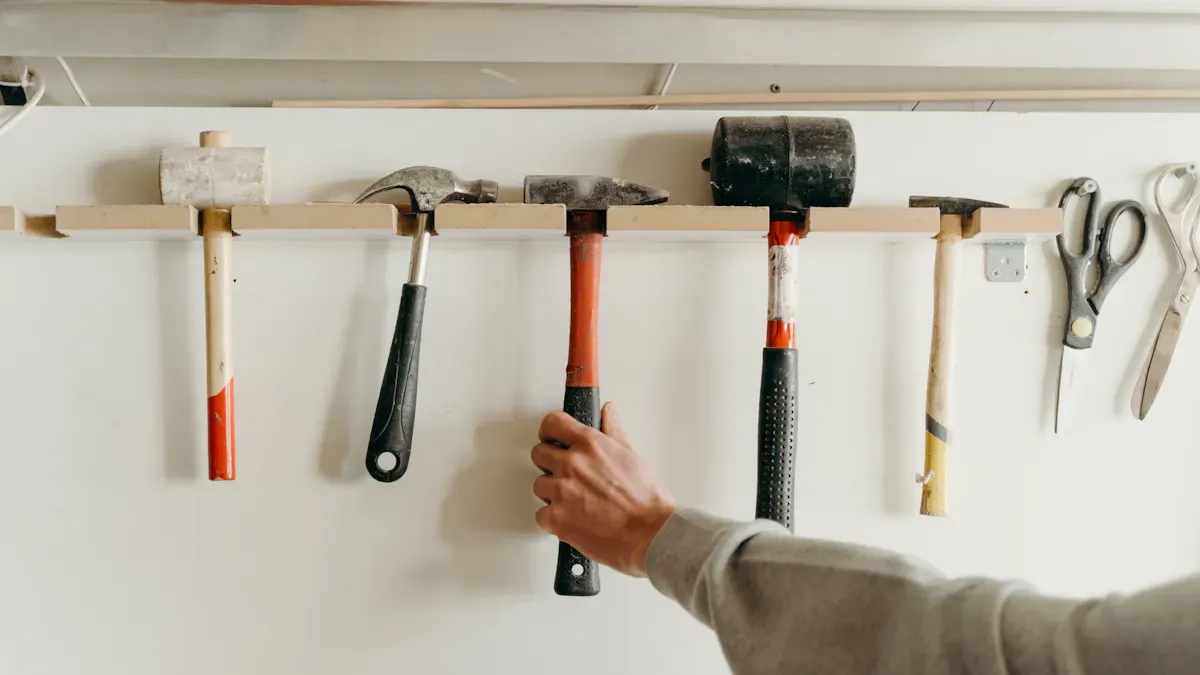
When it comes to hammers, knowing which type to use can make a big difference in your project. Here are some common types of hammers and their specific uses:
Claw Hammer
The claw hammer is a favorite among woodworkers. You can use it for driving nails into wood and pulling them out when needed. Its dual-head design features a flat side for driving and a curved claw for removing nails. This versatility makes it a must-have in your toolbox.
Sledgehammer
If you need to break concrete or drive stakes into the ground, the sledgehammer is your go-to tool. It has a larger, double-faced head that delivers powerful strikes. This hammer is perfect for heavy-duty tasks, so make sure you have one on hand for those tougher jobs.
Ball Peen Hammer
The ball peen hammer is specialized for metalworking. You can use it for shaping metal surfaces and closing rivets. Its unique design features a flat face on one side and a rounded ball on the other, allowing you to perform various tasks with precision.
Tip: Always choose the right hammer for the job. Using the wrong type can lead to frustration and even accidents. Consider the specific task at hand and select a hammer that matches your needs.
By understanding these different types of hammers, you can tackle your projects with confidence and efficiency!
Safety Checks for Your Hammer
Before you start any project, taking a moment to inspect your hammer can save you from accidents and frustration. A quick safety check helps you spot problems early and keeps your work smooth. Let’s break down what you need to look for to ensure safe use of your hammer.
Inspecting the Head
The hammer head is the part that does the heavy lifting, so it needs to be in good shape. Here’s what you should check:
- Check the head attachment. Make sure the hammer head is tightly fastened to the handle. If it wiggles or feels loose, it can fly off while you’re working, which is dangerous.
- Look for abnormal wear. Watch out for deep scratches or uneven wear on one side of the head. These can make your hammer unbalanced and harder to control.
- Inspect the striking surface. The face of the hammer should be smooth and free of mushrooming. Mushrooming happens when the metal spreads out and forms sharp edges. This can send metal shards flying when you strike.
- Watch for cracks or fatigue signs. If you see flat fracture surfaces or shiny bands on the head, these might mean the metal is weakening. Using a damaged hammer head can cause it to break unexpectedly.
If you find any of these issues, don’t use the hammer. It’s safer to replace it than risk injury.
Examining the Handle
The handle connects you to the hammer head, so it must be strong and comfortable. Here’s how to check it:
| Material | Advantages | Disadvantages |
|---|---|---|
| Fiberglass | Non-conductive, reduces vibration | More vibration than wood, cost varies |
| Wood | Light, less vibration, easy to replace | Not as strong, not for heavy jobs |
| Steel | Very strong and durable | Heavy, transmits a lot of vibration |
Look closely for cracks, splinters, or warping. Wooden handles can warp or splinter over time, making them unsafe. Fiberglass handles should have no fractures or chips. Steel handles are strong but can cause hand fatigue if you use them too long.
Here are some tips to keep your handle safe:
- Store your hammer in a dry place to avoid rust or wood damage.
- Avoid striking with the edge of the hammer face, which can stress the handle.
- Use a tool roll or case to protect the hammer during transport.
- Inspect your hammer daily for any signs of damage, especially if you use it often.
Keep Your Hammer Safe and Ready
To keep your hammer in top shape, inspect it regularly. Professionals recommend:
| Inspection Type | How Often |
|---|---|
| Visual Inspection | Every day before use |
| Thorough Examination | Weekly |
| Comprehensive Check | Quarterly or after heavy use |
Daily checks help you catch small problems early. Weekly and quarterly inspections let you find hidden damage before it becomes dangerous.
Tip: Never try to fix a cracked handle yourself. Replace the hammer if you find serious damage. Your safety is worth it!
By following these safety checks, you’ll enjoy safe use of your hammer and avoid accidents. A well-maintained hammer feels better in your hand and helps you work more efficiently. Remember, a little time spent inspecting your tool goes a long way in keeping you safe.
How to Use a Hammer Correctly
Holding the Hammer
Using a hammer starts with how you hold it. Stand upright with your feet shoulder-width apart to keep your balance. Hold the hammer with your palms facing each other, which is called a neutral grip. This grip helps you control the hammer better and lowers the chance of injury. Keep your elbows close to your body while lifting the hammer. Engage your core muscles to stay stable and strong during your swing.
Grip the hammer near the end of the handle, not too tight but firm enough to keep control. Holding it too close to the head reduces your power and can tire your hand quickly. If your hammer has a contoured grip, place your thumb and index finger pointing toward the head for a secure hold. This way, you can swing the hammer smoothly without losing control.
Remember, avoid using momentum alone to swing the hammer. Instead, use your arm and wrist muscles to guide the hammer’s movement. This approach helps you hit your target more accurately and reduces strain on your body.
Striking Techniques
Good hammering technique means striking nails efficiently without bending or damaging them. Here are some steps to help you pound-in nails like a pro:
- Roughen the hammer’s striking face with sandpaper if it feels too smooth. This prevents the hammer from slipping off the nail head.
- Blunt the sharp tip of the nail slightly with your hammer before driving it in. This helps avoid splitting the wood.
- Hold the nail point-outward between your fingers and give it a gentle tap to set it in place.
- Use a small square of cardboard or a file card to hold short nails if your fingers can’t grip them safely.
- Drive nails at a right angle to the surface at first, then adjust the angle slightly to get a stronger hold.
- When you need to set a nail’s head below the surface, use another nail or a nail set tool to avoid damaging the wood around it.
If you’re working near glass, rest the hammer lightly on the pane and slide it to drive the nail carefully. This technique helps prevent cracks or breaks.
Also, choose a hammer weight that fits your task. A hammer that’s too heavy can tire you out fast and make it harder to control your swings. A hammer that’s too light might not deliver enough force, making you swing more times than needed. For most carpentry jobs, a hammer weighing between 16 and 20 ounces works best. It balances power and control, helping you work longer without fatigue.
Targeting and Accuracy
Hitting the nail squarely is key to success when using a hammer. To improve your targeting:
- Focus your eyes on the nail head before you swing. Keeping your gaze steady helps your hand follow through accurately.
- Position your workpiece on a stable surface at waist or face height. This setup lets you keep good posture and control.
- Make sure there’s plenty of clear space around you. Avoid swinging the hammer near people or objects that could get hurt or damaged.
- Use long-nosed pliers to hold nails in place if you’re worried about hitting your fingers.
- Swing the hammer in a smooth, controlled motion. Don’t rush your strikes. A steady swing hits the nail better than a wild one.
- Practice your technique regularly. The more you practice, the better your aim and timing will become. This reduces mistakes and makes pounding-in nails easier.
Tip: Always wear safety goggles and gloves when using a hammer. They protect your eyes from flying debris and your hands from blisters or accidental hits.
By mastering how to use a hammer correctly, you’ll work safer and faster. You’ll avoid common injuries like finger bruises or bent nails. Plus, your projects will look neater and last longer. So take your time, practice good hammering technique, and enjoy the satisfaction of pounding-in nails like a pro!
Using a hammer safely and well takes practice and care. Remember these key points:
- Store your hammer in a dry place to keep it in good shape.
- Check the handle and head before each use.
- Take breaks to avoid getting tired.
Always wear safety goggles and gloves to protect yourself.
Keep practicing, and you’ll build confidence and skill with your hammer in no time!